


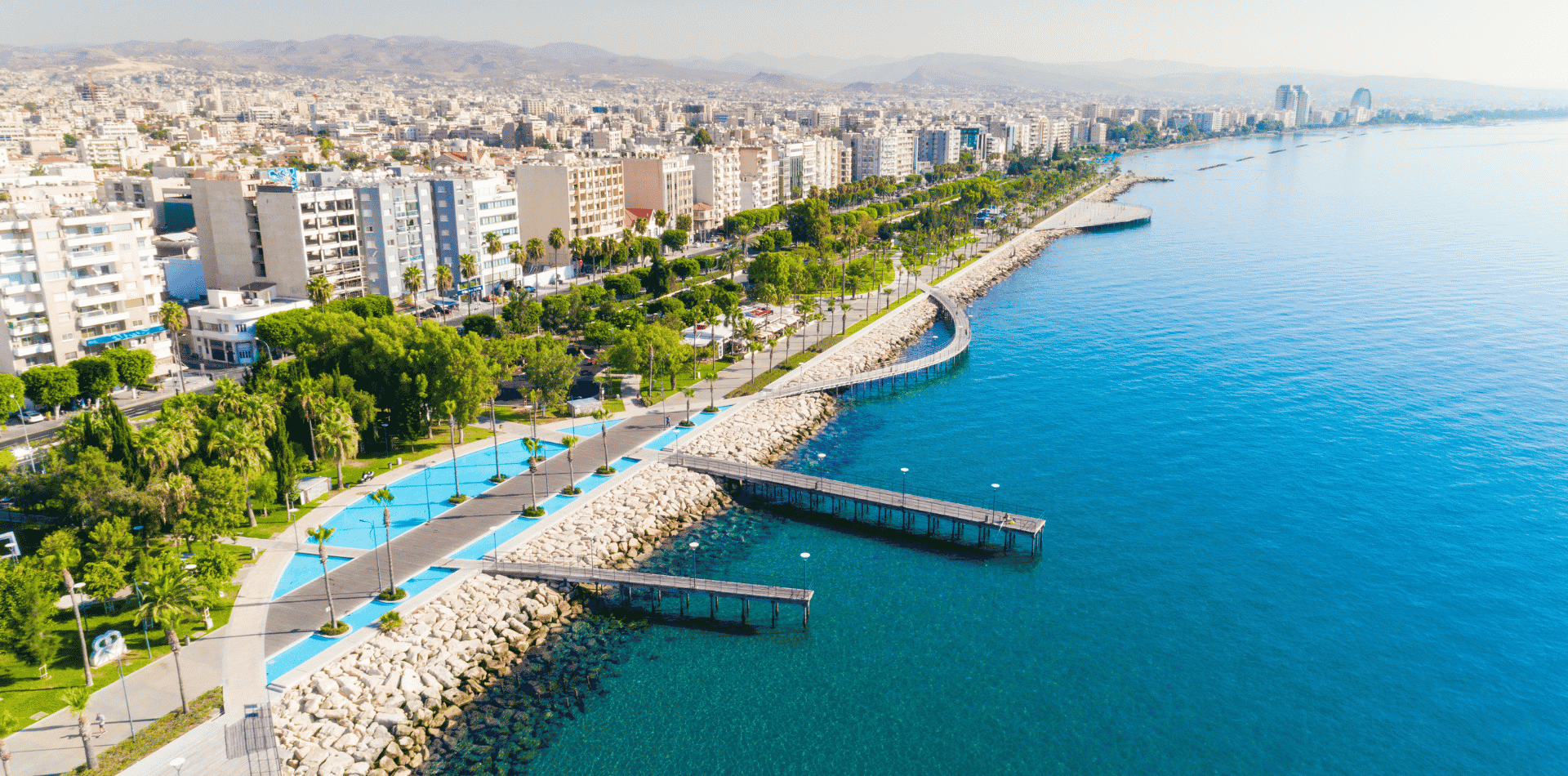
For decades, Aktaia Road remained one of Limassol’s most overlooked coastal stretches. Tucked away behind the bustling port, the district was characterized by its traditional boatyard, aging warehouses, and abandoned industrial complexes, leaving it largely isolated from the daily rhythm of the rest of the city.
That long-standing isolation is now coming to an end. A massive waterfront regeneration initiative spearheaded by the local municipality aims to completely repurpose Aktaia Road. The goal is to establish a vibrant public space that bridges the gap between the city center and the port area, promoting sustainable development while giving residents better access to the sea.
Limassol Mayor Yiannis Armeftis highlighted the strategic importance of the venture, describing the upcoming redevelopment as one of the most consequential urban projects the city has faced in recent years.
A Linear Park Focused on Green Mobility
According to Mayor Armeftis, the primary ambition of the masterplan is to create a seamless link between Limassol Port and the urban core through a continuous public corridor.
Rather than executing a standard road upgrade, the municipality’s vision centers on building an expansive linear waterfront park. The structural blueprint includes:
-
Eco Friendly Transit: Wide pedestrian walkways, dedicated bicycle lanes, and tailored corridors for public transportation.
-
Future Proofing: Built-in spatial provisions to accommodate a potential tram network later on, should it prove logistically viable.
-
Enhanced Access: Improved coastline connectivity for those living in western Limassol, a demographic that has historically been cut off from convenient seaside access.
The coastal transformation aligns with Limassol’s broader policy to champion alternative transport. The new network will tie into existing green corridors, bike paths, and walking trails, making it far simpler for citizens to navigate the city center without a car.
Early Cleanup and Phase by Phase Deliveries
While the grand masterplan undergoes final planning stages, early physical interventions are already reshaping Aktaia Road. Municipal crews have already cleared away approximately 3,000 tonnes of illegally dumped debris and waste from the site. Additionally, the beach has been thoroughly cleaned, derelict eyesores demolished, and more than 500 trees planted.
A fresh, one-kilometer pedestrian and cycling track, outfitted with eco-friendly solar lighting and a brand-new access bridge, is already fully operational. The mayor emphasized that the city intends to open sections of the development immediately as they wrap up, rather than waiting for the entire multi-year project to conclude.
The immediate next phase will focus on a final 400-meter segment. This crucial strip will connect the Garyllis River to the roundabout at the port’s passenger terminal, forming the very first uninterrupted path between the port and the new waterfront.
Key Metrics and Regeneration Benchmarks
To track the progress of the redevelopment, the municipality has highlighted several key environmental and structural markers currently shaping the district:
-
Waste Removal: Environmental teams have cleared roughly 3,000 tonnes of rubble from years of illegal dumping.
-
Urban Greening: Over 500 new trees have been planted alongside a finished 1km illuminated pathway.
-
Zoning Capacity: Current planning regulations permit high-rise developments reaching up to 30 storeys or 120 meters in height.
-
Design Milestone: The official brief and masterplan will culminate in an international architectural competition set for 2027.
Balancing Industrial Heritage with High-Rise Investment
The area’s dramatic evolution is already catching the eye of private investors. Various former factories and old warehouses are currently being converted into commercial hubs, exhibition spaces, and cultural venues. Simultaneously, current zoning guidelines allow for significant vertical density, and construction on the district’s first tower exceeding 30 floors has already broken ground.
However, Mayor Armeftis insists that rapid modernization must respect the area’s blue-collar roots. “The industrial buildings are part of Limassol’s history,” he stated, noting that historic structures should be mindfully adapted for community and artistic initiatives wherever possible.
The Shipyard Relocation Dilemma
One of the most complex hurdles remaining is the future of the traditional boatyard currently occupying the protected coastal zone. The mayor clarified that the city does not intend to force these maritime businesses to shut down permanently. Instead, the goal is to smoothly transition them to a highly organized, modern shipyard facility elsewhere. However, designating a suitable new coastal site for such operations remains the responsibility of the central government.
The Roadmap Ahead
The next major milestone for the project will be the international architectural competition launching in 2027. Academic institutions, including Frederick University and the University of Cyprus, are currently collaborating to draft the official competition brief and comprehensive masterplan.
Local authorities are also in active talks with critical stakeholders, such as government public works departments and port operators Eurogate and DP World. Furthermore, the city plans to host community presentations and workshops later this year, ensuring that local residents can directly contribute their feedback to shape the final architectural layout.
Source: Cyprus Property News